If you’re a small business owner, you’ve probably asked this question at least once:
“Should I invest in SEO or run paid ads?”
Both options promise visibility. Both can bring customers. And both are widely recommended by marketers. But the truth is, they work very differently—and choosing the right one depends on your goals, budget, and timeline.
In 2026, the real answer isn’t about choosing one over the other. It’s about understanding how each works and when to use them.
Let’s break it down in a clear, simple way.
Understanding SEO: The Long-Term Growth Engine
SEO (Search Engine Optimization) is the process of improving your website so it appears organically on search engines like Google when people search for related services.
For example:
- “Best café near me”
- “Resort in Wayanad”
- “Freelance digital marketer”
When your business ranks organically, customers click because they trust those results.
Why SEO Matters for Small Businesses
SEO works quietly in the background, but its impact is powerful.
With SEO, your business:
- Gains visibility without paying per click
- Builds long-term online authority
- Attracts people actively searching for your service
- Creates trust through organic presence
Once your website ranks well, it can bring leads consistently—even when you’re not actively spending money on ads.
The Reality of SEO in 2026
SEO is not instant. It takes time, consistency, and strategy. Search engines now prioritize:
- High-quality content
- Good website experience
- Local relevance
- Genuine value for users
For small businesses, this means SEO is an investment, not an expense. The returns compound over time.
Understanding Paid Ads: The Fast Visibility Tool
Paid Ads (Google Ads, Facebook Ads, Instagram Ads) allow businesses to appear instantly in front of potential customers.
You pay to show your ad to:
- Specific locations
- Target audiences
- People searching for specific keywords
The moment your ad goes live, your business becomes visible.
Why Paid Ads Attract Small Businesses
Paid ads are appealing because they offer speed.
With ads, you get:
- Immediate traffic
- Quick leads or enquiries
- Full control over budget and targeting
- Clear data on performance
For new businesses or seasonal offers, ads can be extremely effective.
The Reality of Paid Ads in 2026
Paid ads stop working the moment you stop paying.
Costs have increased due to competition, and poorly managed ads can burn budgets quickly. Without proper strategy, ads may bring clicks but not customers.
For small businesses, ads need precision, not trial and error.
SEO vs Paid Ads: A Simple Comparison
Let’s look at the key differences that matter most for small businesses:
Time to See Results
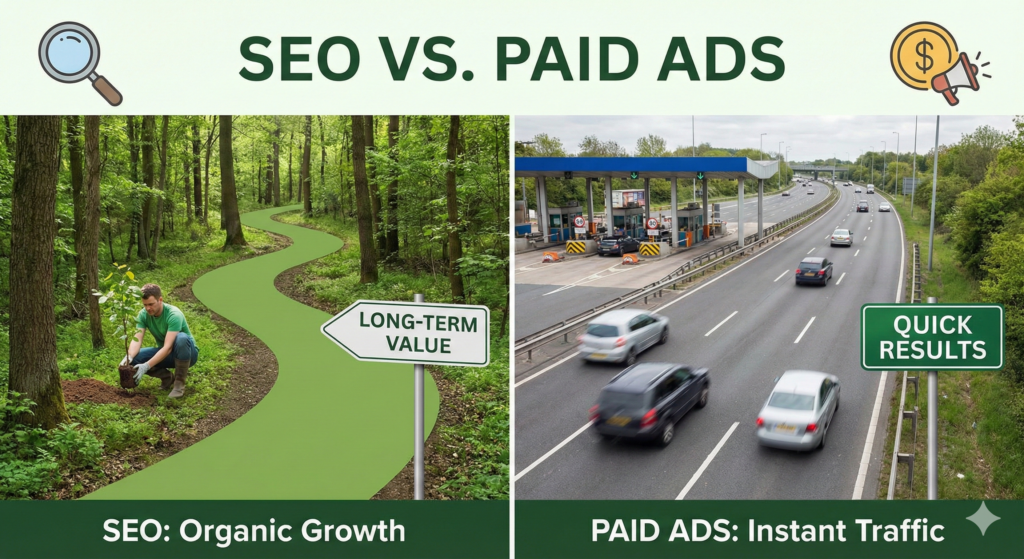
- SEO: Slow but steady
- Paid Ads: Immediate
Cost Structure
- SEO: Upfront effort, long-term returns
- Paid Ads: Continuous spending required
Trust Factor
- SEO: High trust from organic listings
- Paid Ads: Lower trust, but strong visibility
Sustainability
- SEO: Long-lasting impact
- Paid Ads: Stops when budget stops
Control
- SEO: Less direct control, algorithm-based
- Paid Ads: Full control over targeting and messaging
Which One Is Better for Small Businesses?
The honest answer: it depends on your situation.
Let’s break it down.
SEO Is Better If:
- You want long-term growth
- You have a limited monthly ad budget
- You want consistent leads over time
- You’re building a strong brand presence
- You’re not in a rush for instant results
SEO is ideal for service-based businesses, local professionals, and brands that want stability.
Paid Ads Are Better If:
- You need immediate visibility
- You’re launching a new product or service
- You have a time-sensitive offer
- You want quick leads or bookings
- You’re testing a new market
Ads are powerful when timing matters.
The Smart Approach in 2026: Use Both Strategically
In 2026, the most successful small businesses don’t choose SEO or ads.
They use SEO and paid ads together, strategically.
Here’s how:
- Use paid ads to generate quick leads and test what messaging works
- Invest in SEO to build long-term organic visibility
- Retarget website visitors using ads
- Turn high-performing ad keywords into SEO content
This balanced approach reduces risk and maximizes results.
Budget Reality for Small Businesses
Many small businesses worry about budget—and rightly so.
The good news is:
- SEO can start small and scale over time
- Ads can be controlled daily or monthly
- Strategy matters more than spend
A well-planned ₹10,000 budget can outperform a poorly managed ₹50,000 campaign.
The key is clarity, not comparison.
Common Mistakes Small Businesses Make
Some frequent mistakes include:
- Running ads without a landing page
- Expecting SEO results in one month
- Spending on ads without tracking conversions
- Ignoring local SEO
- Choosing trends over strategy
Avoiding these mistakes can save money and frustration.
Final Thoughts
SEO and paid ads are not competitors. They are tools with different strengths.
For small businesses in 2026:
- SEO builds the foundation
- Paid ads accelerate growth
When used wisely, they complement each other beautifully.
The real question is not which is better, but which is right for your business right now.
With the right guidance, even small businesses can compete, grow, and thrive in the digital space.
Make smarter marketing decisions.
Visit my website to learn more: Basil Jis